For Parents
What Does Play-Based Learning Really Mean at GMPS?
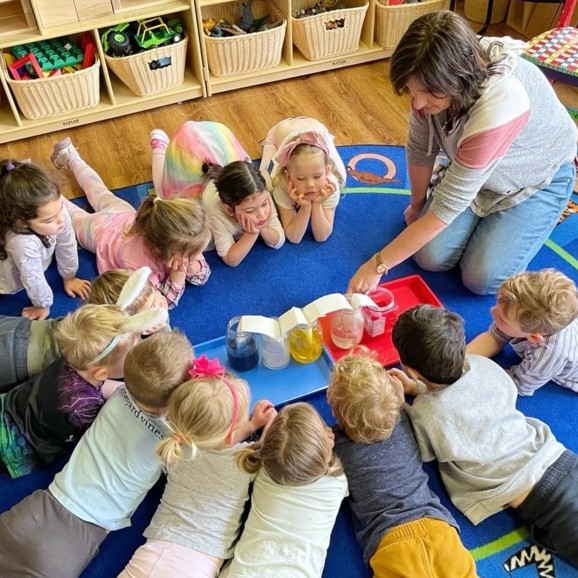
At Glenview Methodist Preschool, play-based learning means children learn through active, hands-on experiences that are intentionally planned by knowledgeable teachers. Play and academics are not opposites at GMPS. We combine purposeful play with developmentally appropriate early literacy and math instruction so children build skills, confidence, curiosity, independence, and a love of learning.
What Does Intentional Play-Based Teaching Look Like?
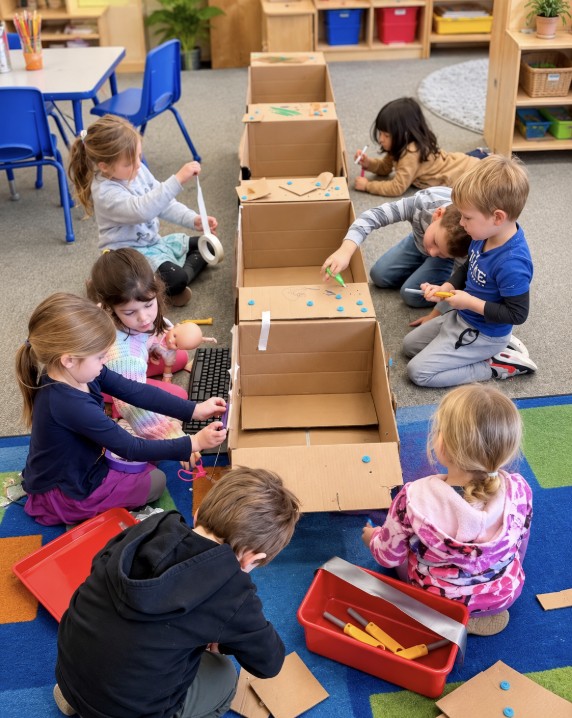
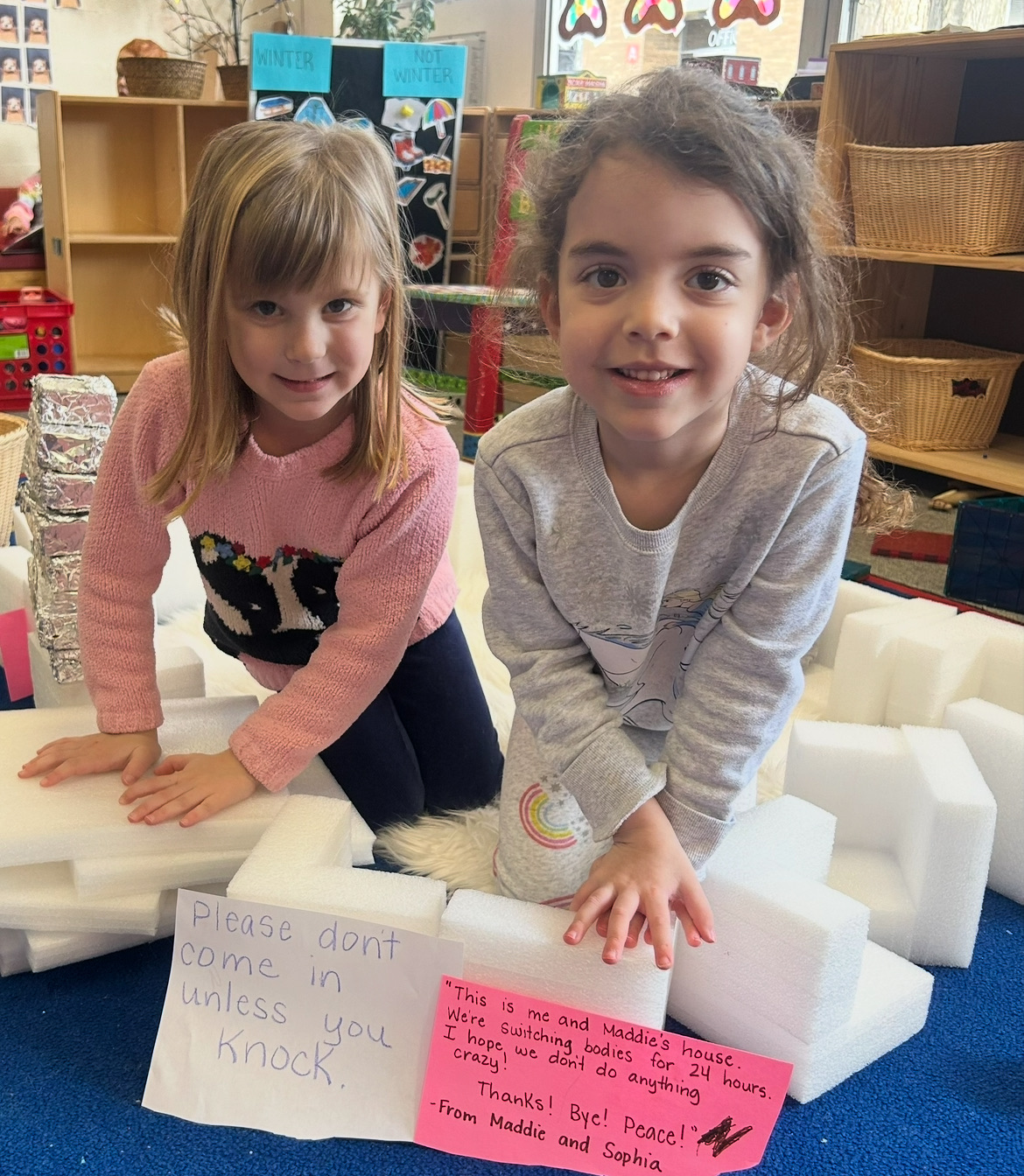
Imagine a group of children running a pretend restaurant. To the children, they are simply playing. But within that play, they may be counting place settings, writing menus, using new vocabulary, taking turns, negotiating roles, recognizing print, and solving problems together.
At the same time, the teacher is intentionally supporting the learning. She might add menus and notepads, introduce new vocabulary, ask whether there are enough plates for everyone, help children work through a disagreement, or ask a question that extends their thinking.
Children might be…
- Counting and comparing
- Writing and recognizing print
- Using new vocabulary
- Taking turns and solving problems
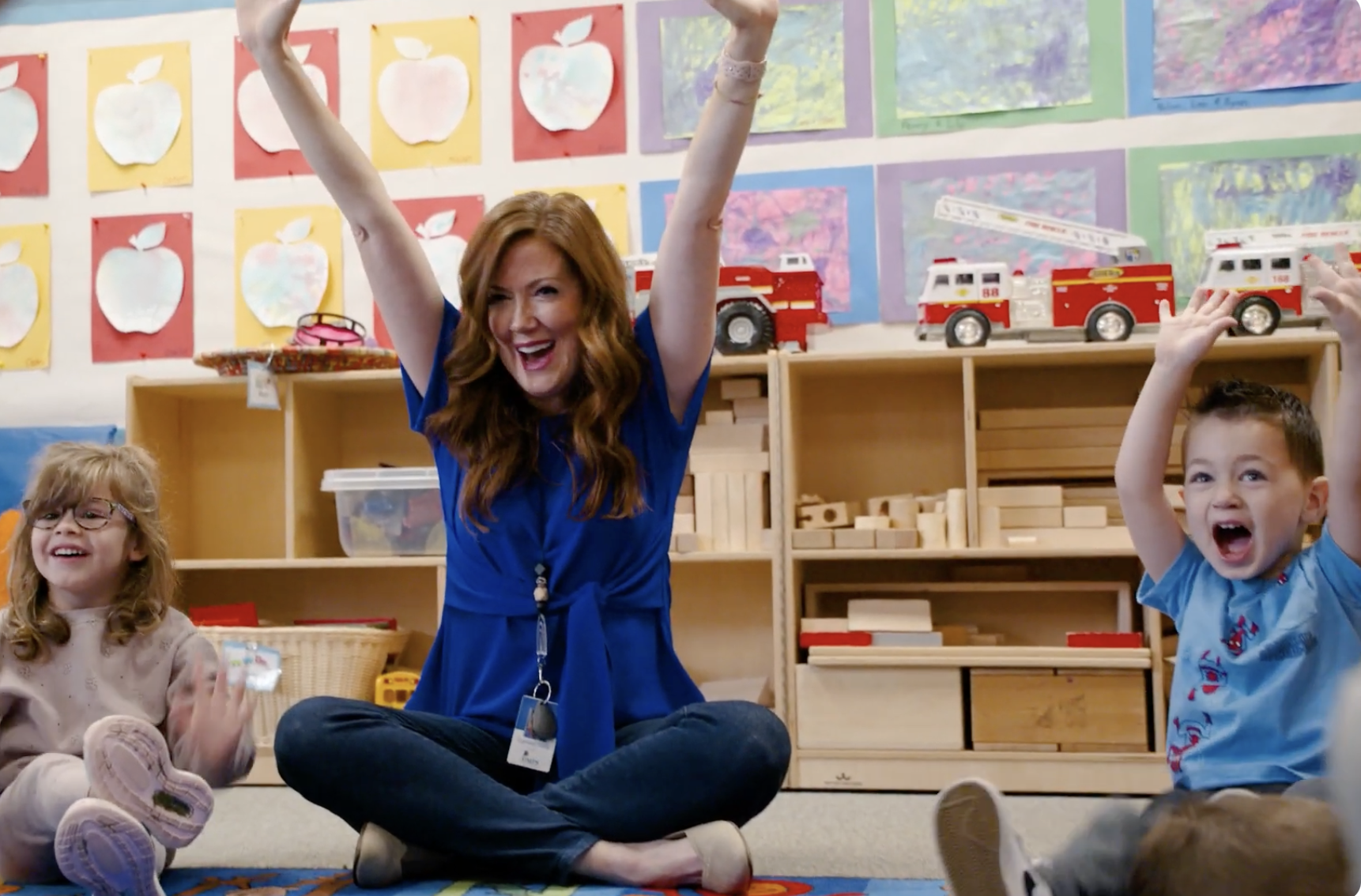
Teachers might be…
- Asking questions
- Adding new materials
- Demonstrating a skill
- Helping children extend an idea
Play-based does not mean unplanned.
Teachers know when to step in, when to add something new, and when to step back and let children investigate independently.
How Teachers Plan for Learning
Teachers plan classroom environments and experiences with specific developmental goals in mind. They observe what children already know, notice their interests and questions, and use that information to decide what materials, books, conversations, games, and experiences to offer next.
Teachers also use the Illinois Early Learning and Development Standards (IELDS) to guide curriculum and planning, while allowing those goals to come to life naturally through play, projects, conversation, and exploration.
What About Math & Early Literacy?
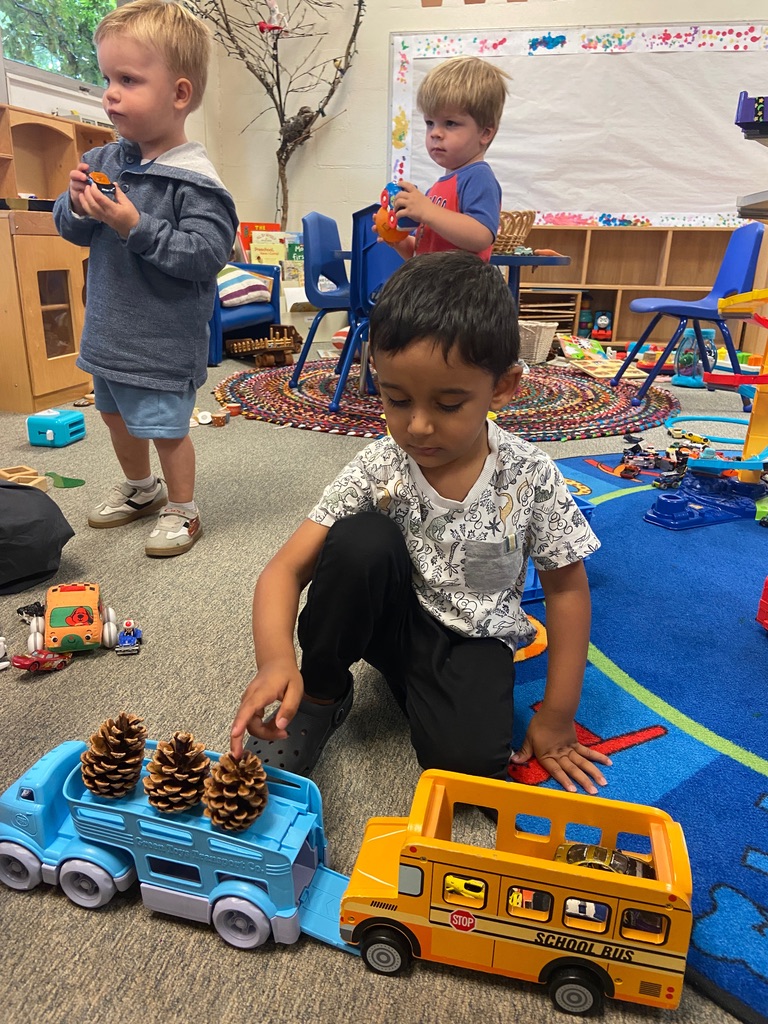
Play-based learning at GMPS includes intentional teaching. We use brief, developmentally appropriate lessons to introduce important early math and literacy skills, then give children opportunities to use those ideas naturally throughout the day.
Early Math
Math Counts
Our own developmentally appropriate preschool math curriculum, based on the Illinois Early Learning and Development Standards (IELDS).
Early Literacy
Heggerty Phonemic Awareness
Short, engaging oral experiences that help children hear, recognize, and work with the sounds in spoken language.
Early Writing
Handwriting Without Tears
Developmentally appropriate experiences that build fine-motor skills, letter knowledge, and the foundations children need for confident early writing.
Worksheets are used rarely; whenever possible, children learn by manipulating materials, experimenting, talking, creating, and solving real problems.
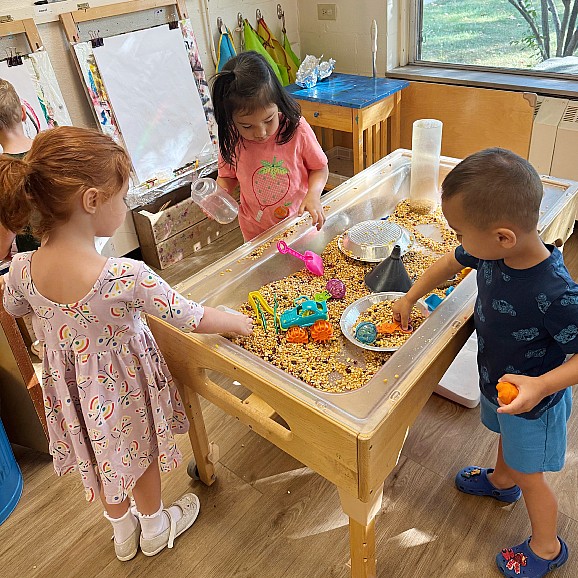
The teacher introduces the idea. Play gives children a chance to make it their own.
What Children Learn Through Play
Thinking & Problem-Solving
Planning, predicting, experimenting, and persisting
Language & Literacy
Conversation, storytelling, vocabulary, and meaningful print
Social-Emotional Development
Cooperation, negotiation, self-regulation, and friendship
Independence & Confidence
Making choices, managing materials, asking for help, and trying again
Process Art: Learning Through Creating
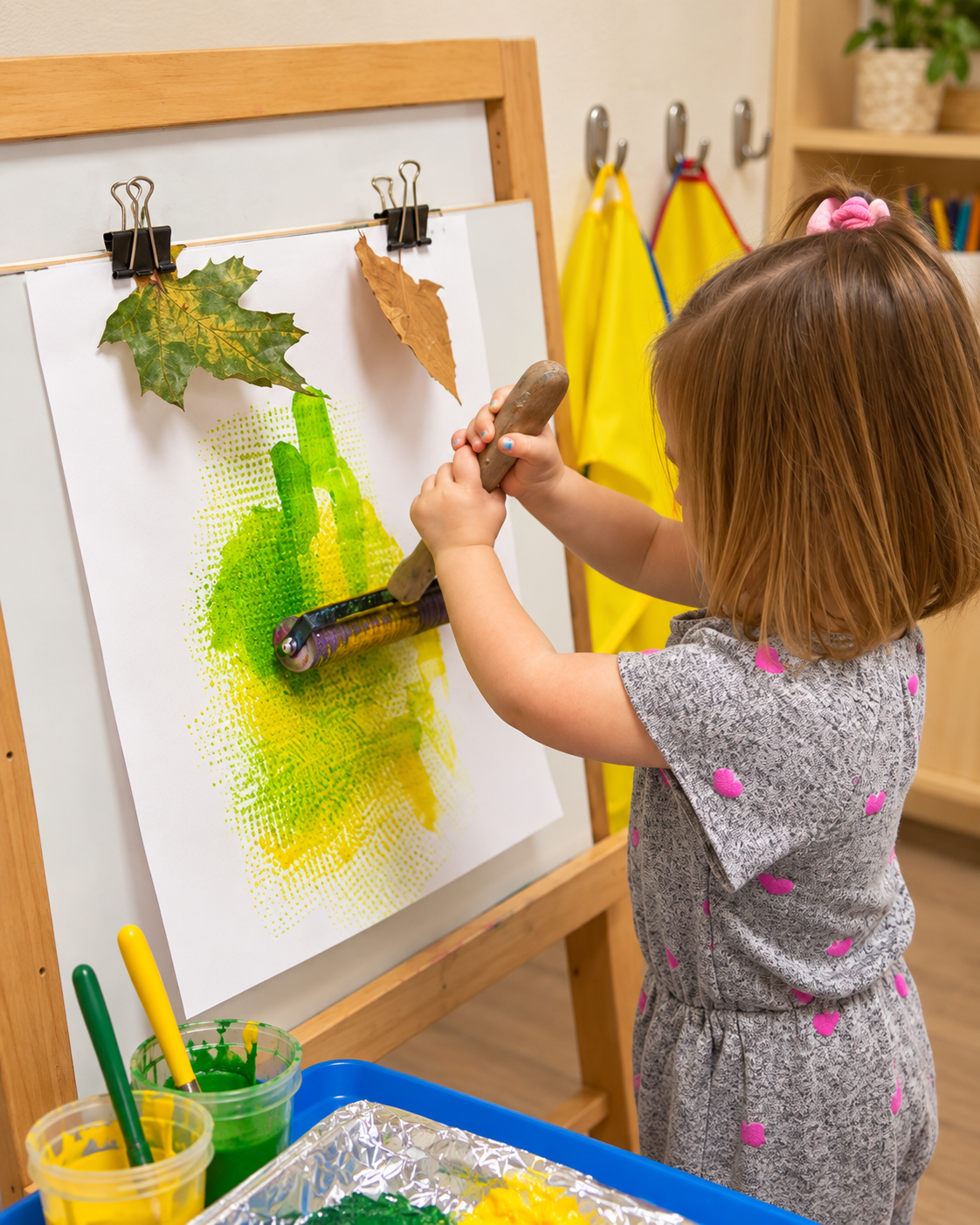
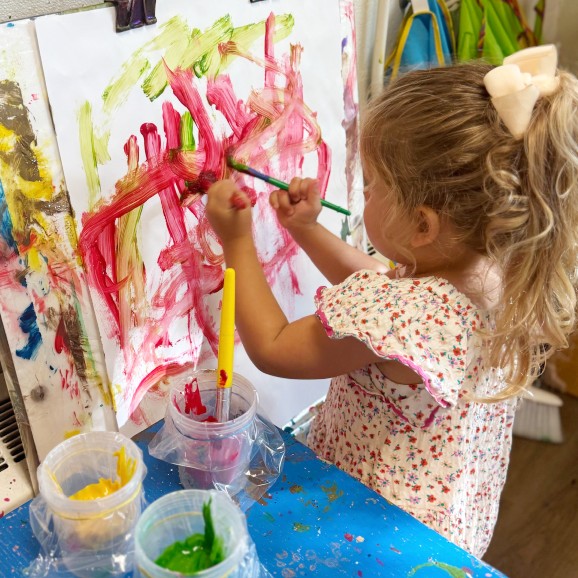
Process art is one way play-based learning comes to life at GMPS. Children explore paint, collage, clay, loose parts, and other materials without being asked to copy a teacher-made example.
The focus is on experimenting, making choices, solving problems, and expressing their own ideas — not creating identical finished products.
Will My Child Be Ready for Kindergarten?
Yes — and we believe kindergarten readiness is about much more than knowing letters and numbers.
Children also need to:
- Communicate ideas and needs
- Solve problems
- Manage frustration and transitions
- Persist when something is difficult
- Approach new experiences with confidence
- Listen and participate in a group
- Ask for help
- Work independently and with others
- Make friends and cooperate
A strong play-based program gives children opportunities to develop these abilities every day while also building early literacy and math skills.
At GMPS, we want children to leave preschool confident, capable, and excited to keep learning.
Research & Resources: Want to Learn More?
- NAEYC — Developmentally Appropriate Practice
NAEYC explains how high-quality early childhood education balances child-led play with intentional teaching. Through guided play, teachers thoughtfully prepare the environment, ask questions, introduce ideas, and help extend children’s learning while allowing children to remain active participants in the experience.
- Harvard Center on the Developing Child — Brain-Building Through Play
The Center on the Developing Child explains how playful experiences help children practice important executive-function skills, including attention, working memory, self-control, and flexible thinking.
- American Academy of Pediatrics — The Power of Play
The American Academy of Pediatrics describes play as an important part of healthy development that supports cognitive, language, social-emotional, and self-regulation skills while giving children opportunities to explore, problem-solve, build relationships, and develop a sense of agency.
About the Author
Written by Karen Coan, M.A. in Education, Director of Glenview Methodist Preschool
Karen has served as Director of GMPS since 2016 and works closely with teachers and families on curriculum, school transitions, behavior guidance, safety, staff development, and program planning.
Last updated: October 2026